
High-energy trauma to the hand, often referred to as a Finger injury, is a complex medical condition where a single incident causes damage across multiple anatomical systems.
Unlike simple fractures or cuts, a crush injury involves a simultaneous impact on the skin, tendons, nerves, blood vessels, and bones. Because these injuries affect the hand's intricate framework all at once, they require a specialized "Layered Planning" approach to ensure successful recovery and restoration of movement.
What Makes a Finger Injury Unique?
In a high-energy trauma event, the force applied to the hand is immense. The primary challenge for a surgeon is that the damage is often deeper than what is visible on the surface. A "Crush Hand" isn't just about one broken bone; it is about the interconnectedness of the injury.
Skin Loss
If the skin is lost, underlying tendons cannot glide, leading to permanent stiffness.
Nerve Crush
If nerves are crushed, muscles lose their command and functional control.
Bone Instability
Unstable bones cause the hand to lose its vital structural length and alignment.
The Systematic Recovery Algorithm
To manage these complex cases, Dr. Rohit Somani follows a strict medical protocol designed to prioritize the long-term functionality of the hand:
System-by-System Evaluation
Each layer of the hand is assessed individually (Bone, Nerve, Tendon, Skin) to determine the exact extent of damage.
Early Tissue Coverage
Prioritizing skin and soft tissue coverage is essential to protect internal structures from infection and drying out.
Strategic Delay ("Don't Burn Bridges")
If the health of a tendon or nerve is in doubt, primary repair may be delayed to ensure a better environment for surgery later.
Functional Focus (Function > Form)
The ultimate goal is restoring how the hand works. A hand that looks slightly different but works perfectly is always the surgical priority.
Clinical Case Studies
Real-world results achieved through systematic trauma protocols.
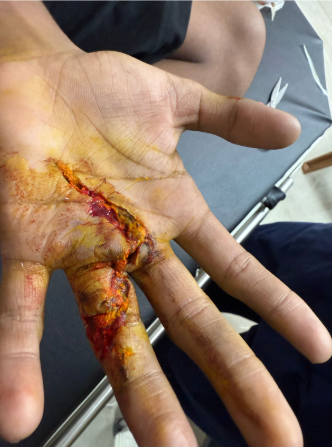
Barbed Wire Injury
Patient: 12-year-old male
Mechanism: Hand caught in barbed wire while fetching a ball.
Assessment: Significant debris/contamination present in the wound.
Clinical Findings: Active movement in MCP, PIP, and DIP joints. Capillary refill healthy at <3 seconds. No bony or vascular injuries.
The Surgical Protocol:
- Thorough Debridement (cleaning the wound).
- Damage Assessment (confirming bleeding from flaps and intact tendons).
- Meticulous Suturing (precise closure of soft tissue).
Outcome: Full functional recovery by 2 months.
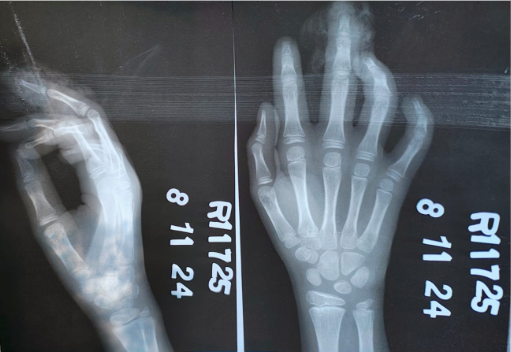
The "Dangling Fingertip"
Patient: 8-year-old girl
Mechanism: Heavy cement garden bench fell directly onto the hand.
Diagnosis: "Dangling fingertip" caused by a distal phalanx tip fracture in the middle finger.
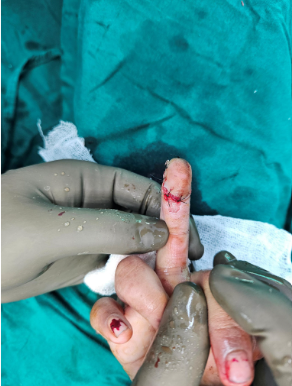
Complication & Management:
At 15 days post-op, the tissue began blackening. The specialist’s advice was critical: "DO NOT DO ANYTHING."
By allowing the scab to mature naturally over one month, the underlying tissue was preserved.
Outcome: Scab removed by month two; dead nail fell off; fingertip successfully salvaged.
Fracture with Tendon Tear
Patient: 44-year-old male
Mechanism: High-energy crush at the level of the proximal phalanx (P1).
Presentation: Active finger extension impossible. Imaging confirmed P1 bone fracture.
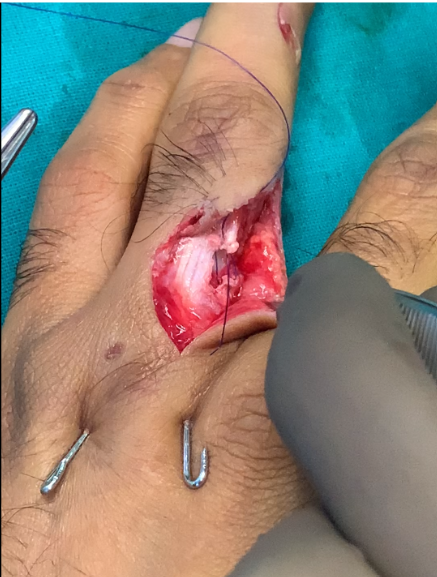
The Reconstructive Strategy:
- Step 1: Debridement revealed the EDC (Extensor Digitorum Communis) tendon was partially torn.
- Step 2: Bone Fixation using two antegrade cross K-wires to stabilize the fracture.
- Step 3: Primary Repair of the torn EDC tendon to restore the extension mechanism.
The Surgeon's "Take-Home" Message
Think System-by-System
Always address skin, bone, tendon, and nerve individually to ensure no system is overlooked.
Prioritize Coverage
Early skin coverage and maintaining limb length are vital for protecting internal repairs and preventing infection.
Don't Burn Bridges
If there is doubt regarding viability, it is better to delay a specific repair than to rush it during the initial phase.
Honesty in Prognosis
Patients must understand that in trauma, Function > Form. The primary goal is a working hand.